Elina Kulikova
La Trilogie de la guerre
Full trilogy
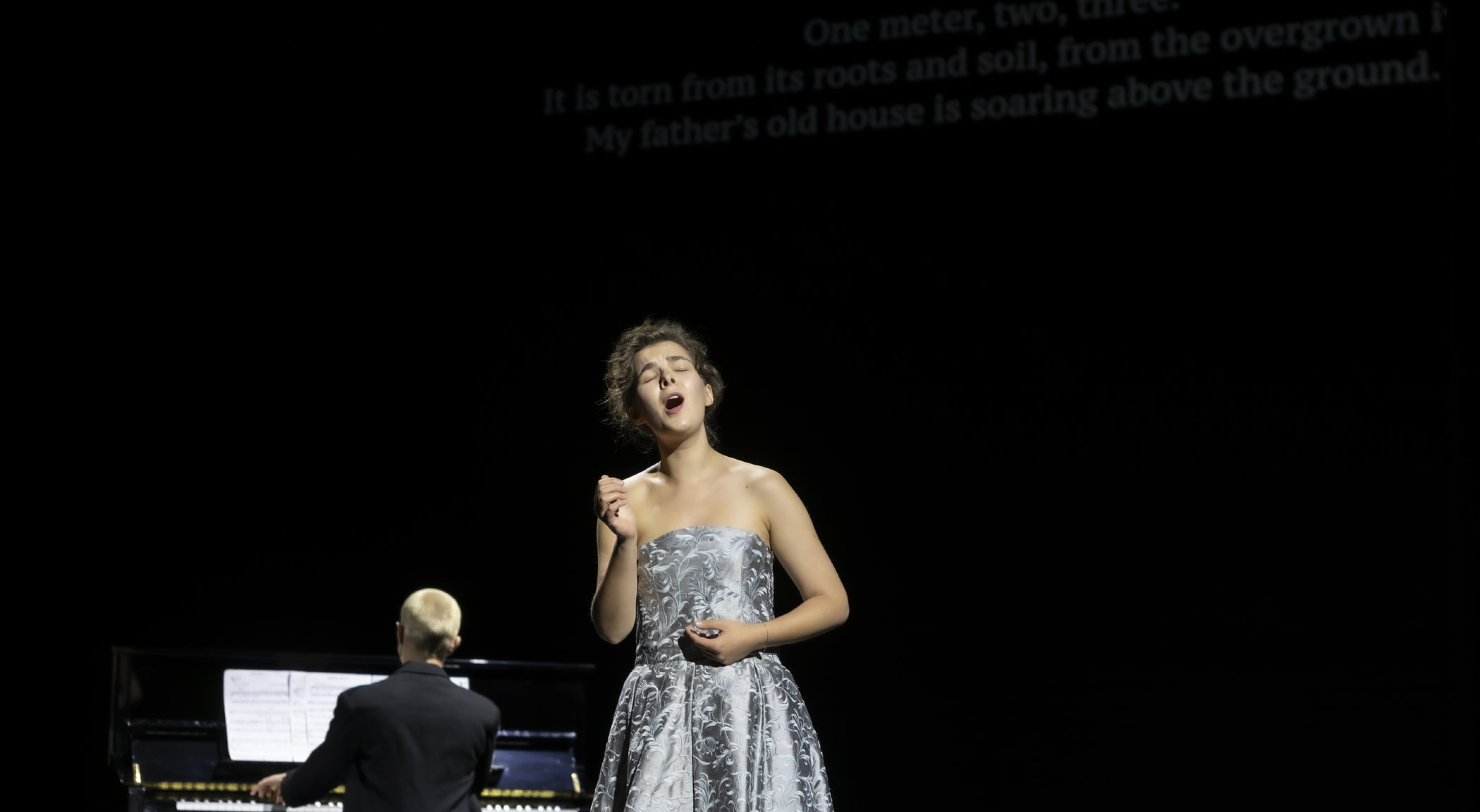
© Bohumil Kostohryz ©
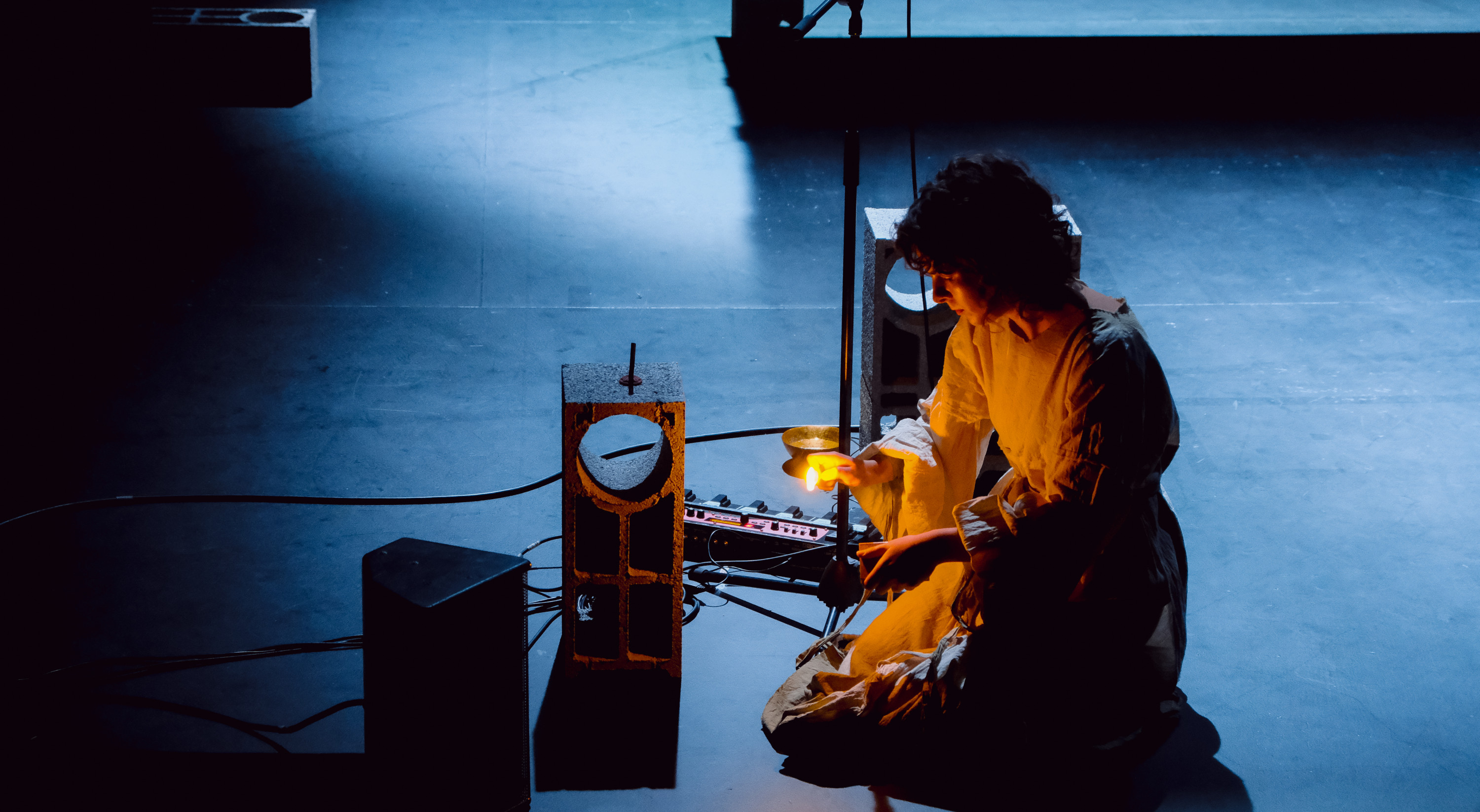
© Ekaterina Romanova ©
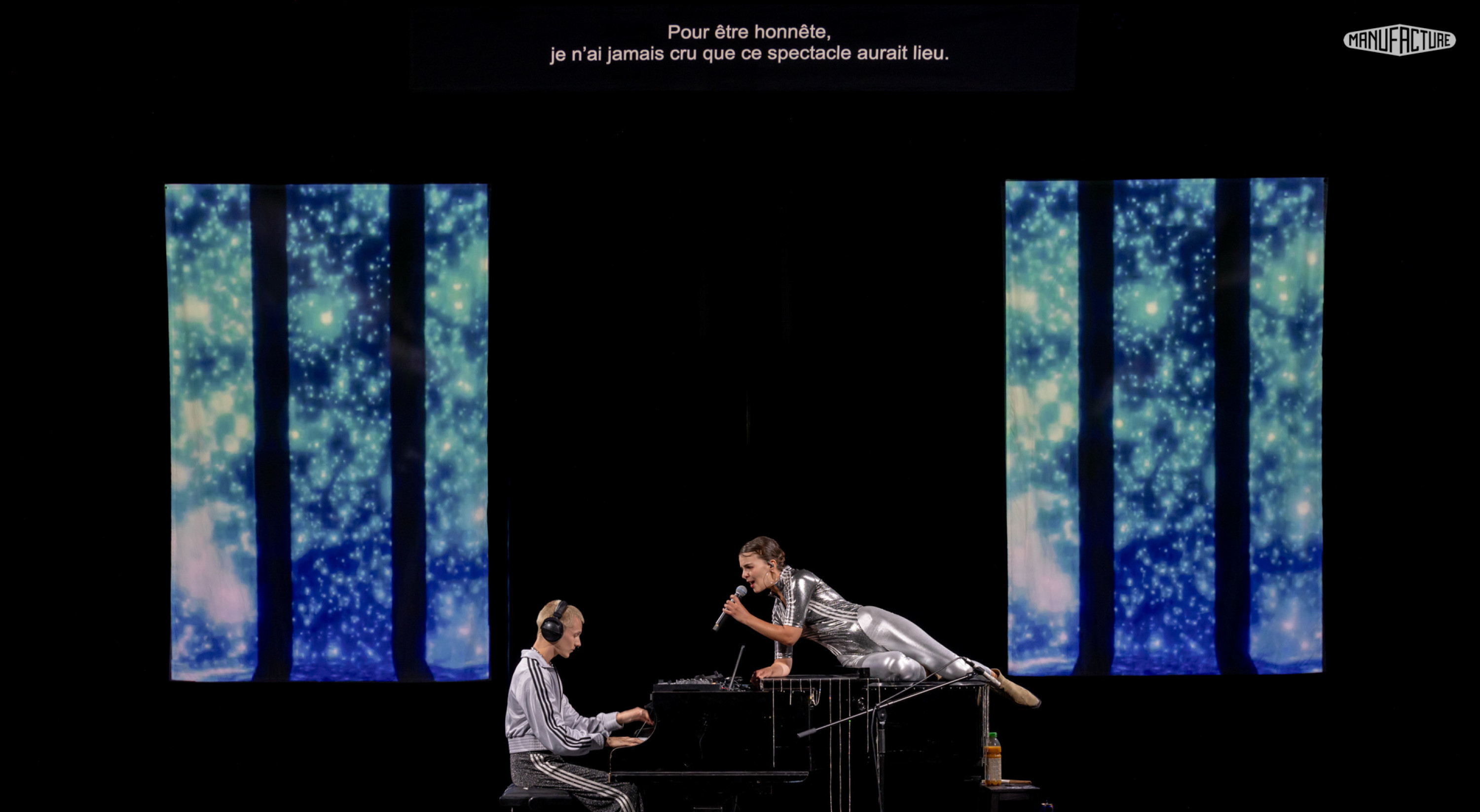
© Gregory Batardon — копия ©
Sunday september 27
15h - Intégrale
Part 1—Un champ brûlé
Concept by Elina Kulikova and Dima Efremov. Vocal coaching by Maya Novikova. Costumes by Elina Kulikova. French translation by Eleonora Mitranovich. Outside eye by Natalia Kaliada and Nicolai Khalezin (Belarus Free Theatre).
Part 2 — Un endroit perdu
Concept by Elina Kulikova and Dima Efremov. Sound creation by Dima Efremov. Set design by Martin Riewer. Costumes by Elina Kulikova. French translation by Eleonora Mitranovich.
Part 3 — Une nuit blanche
Concept by Elina Kulikova and Dima Efremov. Sound creation by Dima Efremov. Set design, decor and construction by Martin Riewer and Thérèse Weibel. Choreography by Yulia Arsen. Vocal coaching by Maya Novikova. Costumes by Elina Kulikova. Lighting design by Clovis Marchon. Video and recording by Paul Mollin. Outside eye by Carolina Bianchi.
La Villette and Festival d’Automne à Paris present this performance in co-production.
Elina Kulikova’s Trilogy of War, translated from Russian by Lora Mitrahovich (published by l'Espace d'un instant), is available for purchase before and after the performances.
Sunday, September 27
At 7:45 p.m., following the full performance, a discussion with Elina Kulikova and Dima Efremov, moderated by Kamila Mamadnazarbekova (cultural journalist and researcher). How does one inhabit a performance that unfolds over time? What does it mean for the performers to push their bodies to the limits of endurance? And what role is the audience called upon to play when they no longer merely observe, but participate, wait, accompany, and share in this temporality?
A selection of books related to the performance will be available at the Librairie du Parc – Actes Sud, both on-site and in the bookstore (Grande Halle).

For your convenience, suitable seats can be offered; contact the reception at La Villette to reserve them by calling 01 40 03 75 75 or by email at serviceclient@villette.com, from Monday to Saturday from 11am to 7pm in order to inform them of your specific needs and if you wish to be placed back in the front row with a guide.
In addition, parking is reserved for people with reduced mobility. To park or be dropped off near the event venue, simply contact our Security department by email at securite@villette.com at least 24 hours in advance.
In a theatrical and musical trilogy, Elina Kulikova and Dima Efremov set out to denounce Russia’s war and invasion of Ukraine. In their hands, this gesture becomes the starting point for an investigation of an artistic and deeply personal nature. From its makings to its innermost effects, they explore what it means to belong to a country at war. Turning to references from the Russian repertoire — whether they be classical, folkloric or festive—the show builds up the contours of an ode to resistance and turns the stage into both place of refuge and confrontation.
The first part, Un champ brûlé, is a reflection on war as cultural inheritance, and on the narratives that make it possible. How can a tradition carry with it and pass on violence which ends up by justifying itself? Onstage, in classical musician attire, Elina Kulikova and Dima Efremov attempt to ward off a double trauma, that of singing in front of an audience, and that of watching their country invade and massacre its neighbour.
By means of songs from Russian folklore, Elina Kulikova summons, in Un endroit perdu, the second part of her trilogy, centuries of history and a memory marked by violence. This vocal gesture becomes a space for questioning the guilt of belonging to a nation that perpetuates this violence. But going beyond shame, the show investigates identity and the impossibility of purifying yourself of your own culture: “I do not feel shame because I embody it”.
The third part takes on a more active, militant dimension. Une nuit blanche, set to electronic music, takes its inspiration from the accounts of Dima Efremov’s activism, leading to the freeing of numerous political prisoners in Russia. The piece links clandestine spaces of celebration to that of the theatre, as a place of resistance and refuge. What does electronic music enable us to express or set free, in the face of war, repression and the traumas it breeds?