Laurène Marx, Bwanga Pilipili
Portrait de Rita
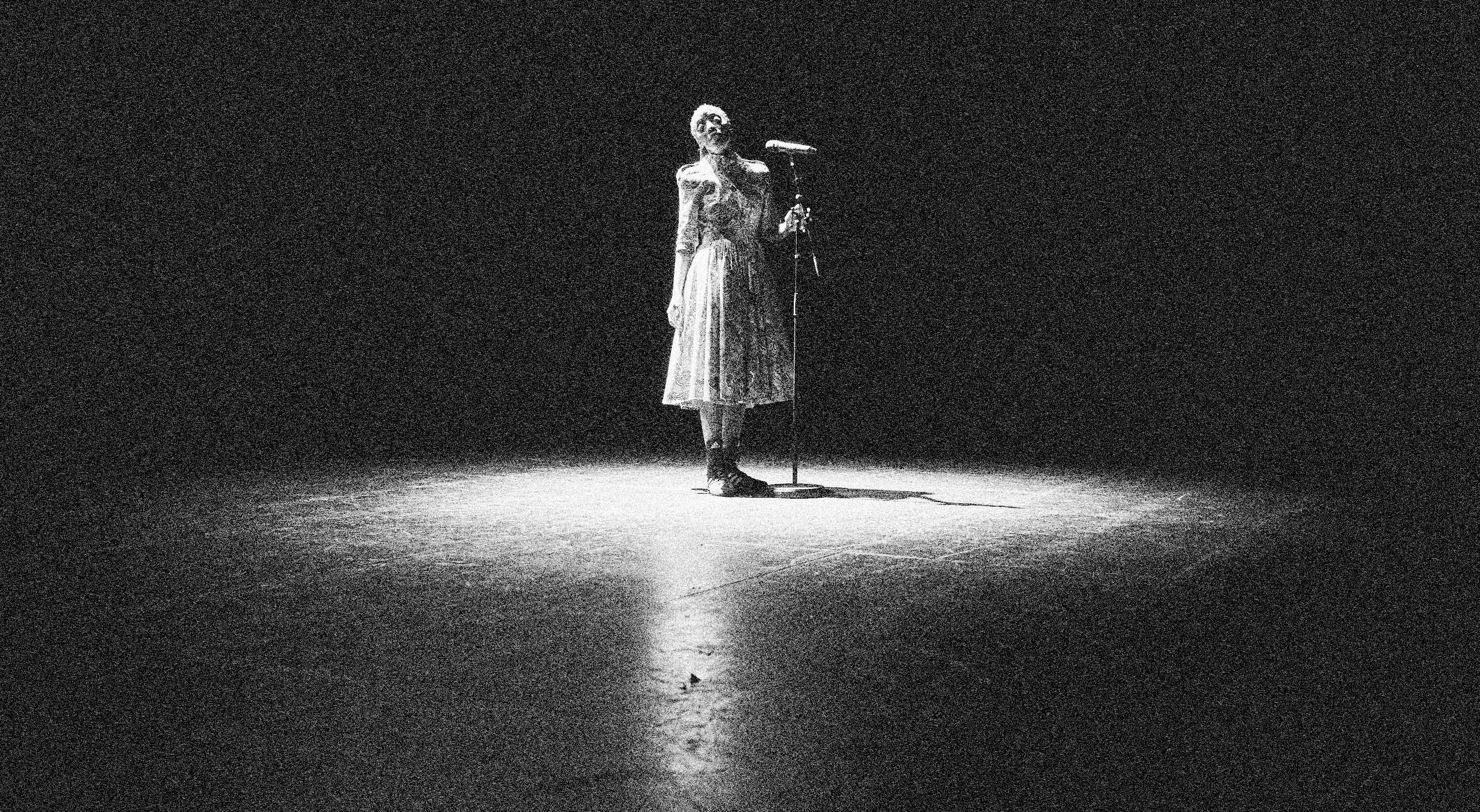
© Christophe Raynaud de Lage ©

Métro : Garibaldi (ligne 13)
Wednesday october 14
20h
Thursday october 15
20h
Text and staging Laurène Marx. Text based on interviews with Rita Nkat Banyang conducted by Laurène Marx, Bwanga Pilipili. With Bwanga Pilipili. Lighting Kelig Le Bars. Music Maïa Blondeau with the participation of Nils Rougé. Artistic collaboration Jessica Guilloud.
Production Hande Kader Company; Bureau des Filles
Coproduction Théâtre Ouvert—National Center for Contemporary Dramaturgies; Les Quinconces L’Espal – Le Mans National Stage; Festival d’Automne in Paris; Théâtre National Wallonie-Bruxelles; Les Halles de Schaerbeek (Brussels); Collectif FAIR-E—CCN of Rennes and Brittany; TNS—National Theater of Strasbourg; Théâtre Sorano
The Festival d'Automne à Paris is a coproducer of this show and is presenting it as a corealisation with the Espace 1789.
In September 2023, Mathis, a 9-year-old schoolboy near Charleroi, was subjected to racist insults from his classmates. He reacts angrily and, considering the situation beyond their control, the school decides to call the police. On arriving at the school, his mother, Rita, is greeted with her son being pinned to the ground by a police officer.
Based on this act of racist violence, the authoress and director Laurène Marx, a specialist in solo work for the stage, and Bwanga Pilipili, actress, authoress and director, choose to retell the events through the life history of the mother, Rita, a Cameroon businesswoman now working as a home help. What role does the white gaze play in the construction of a reductive, and objectifying vision of women? The authoress investigates an identity path that is not her own, exploring its various ambiguities and projections. What makes this show so unique is this meeting of three perspectives, that of a mother, around whom the story revolves, an actress, a keen observer and victim of ethno-racial discrimination herself, and that of a white transgender authoress, who brings her own thoughts about what it means to be white. United by a similar experience of fetishization and dehumanization, these three perspectives intersect with each other. Based on interviews conducted with Rita Nkat Banyang, Laurène Marx and Bwanga Pilipili point out a systemic racism that suffocates a woman in her work just as it suffocates her son on the ground.
Métro : Garibaldi (ligne 13)