Myriam Gourfink
Masse
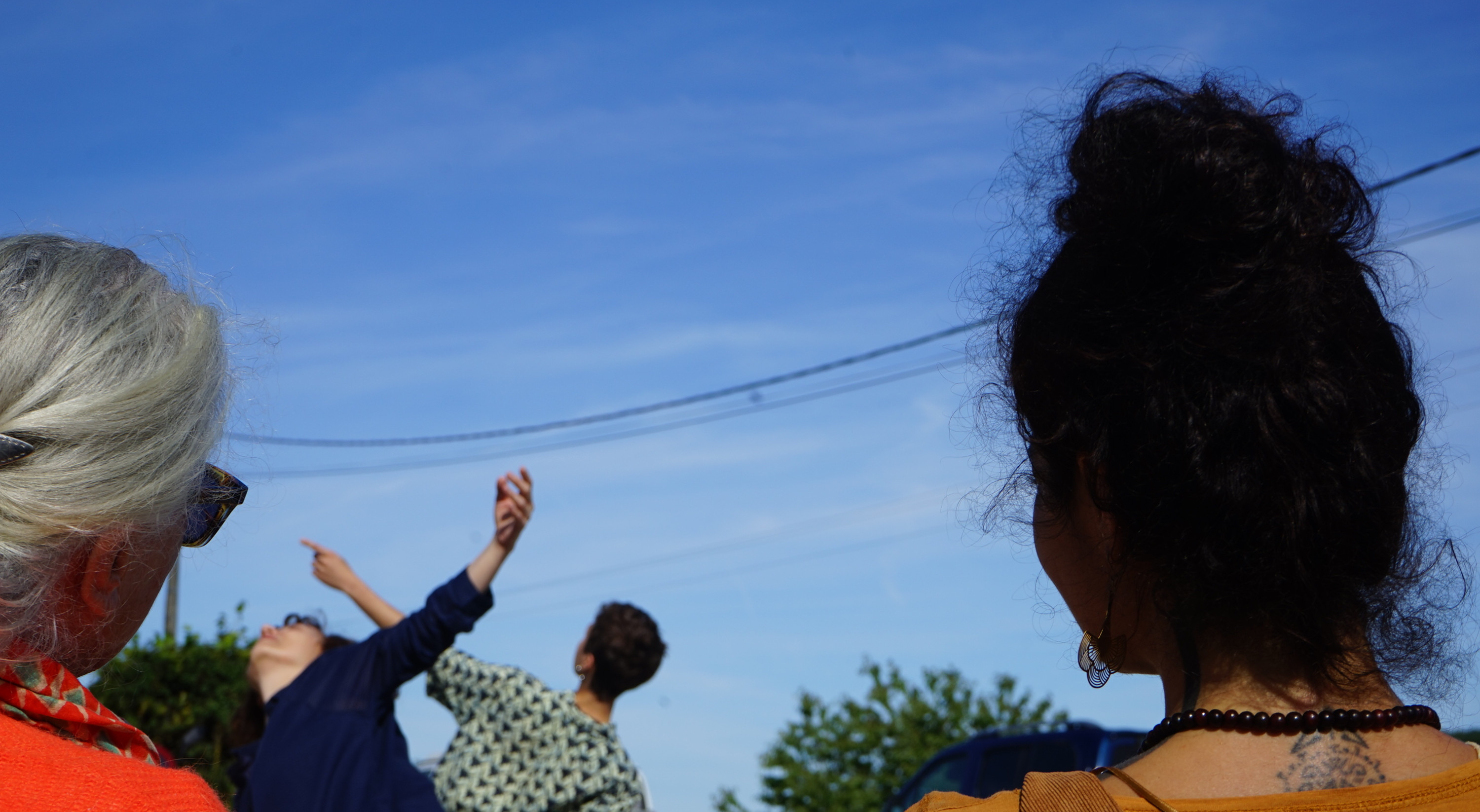
© Clara Cornil ©
Metro : lignes 1, 8, 12 - Concorde
Bus : lignes 42, 45, 52, 72, 73, 84, 94 - Concorde
Vélib'
Cambon-Rivoli (n°1020)
Assemblée Nationale (n°7009)
Quai Anatole France-Musée d'Orsay (n°7110)
Quai d'Orsay-Invalides (n°7112)
Monday september 21
19h
Monday september 21
20h30
Music Kasper T. Toeplitz. Choreography Myriam Gourfink. Dance Myriam Gourfink and France Cartigny. Technical direction and sound design Zakariyya Cammoun. Costumes Catherine Garnier. Administration and production Amandine Bajou. Communication Cédric Chaory.
The project has been awarded an artist residency at Les Ateliers du Milieu
With support for dance research and heritage from the CND Centre national de la danse
Loldanse receives funding from the Drac Île-de-France—Ministry of Culture under the company support scheme
The musée de l’Orangerie and the Festival d’Automne à Paris present this show in corealisation, as part of the ‘Danse dans les Nymphéas’ programme.
With the support of
How can we share dance which is of a deeply intimate nature? Masse by Myriam Gourfink, a piece which stems from a meditative practice, explores states of perception and resonance. Originally developed as a solo piece in 2022, here it is reimagined in the form of a duo with France Cartigny. Their relationship becomes a new driving force for the writing.
For a number of years, Myriam Gourfink has been furthering her research based on the meditative practices of Tibetan yoga. Drawing upon these techniques, she explores different bodily states based on breathing, internal circulations and sliding fascias. With Masse, she furthers this approach by honing in on states of resonance. Within these phases, images appear, as well as sensations which gradually come into focus and guide the movement. The latter unfurls slowly, from inside the body, into a continual form of dance which is attentive to transformations. This shift opens up a shared place of investigation, carried along by a relationship rooted in transmission and a form of filiation. Between the two of them, trajectories shift, balance points become redefined and the different circulations adjust in accordance with attraction-based interplay. Within the confines of Claude Monet’s Nymphéas (Water Lilies) and in very close proximity to the audience, the two performers explore a dance to be shared. This relationship feeds into the dance itself, one which listens in a different way, and transforms itself via its contact with the other, extending into otherness.
Metro : lignes 1, 8, 12 - Concorde
Bus : lignes 42, 45, 52, 72, 73, 84, 94 - Concorde
Vélib'
Cambon-Rivoli (n°1020)
Assemblée Nationale (n°7009)
Quai Anatole France-Musée d'Orsay (n°7110)
Quai d'Orsay-Invalides (n°7112)