Lubaina Himid
A Fashionable Marriage
octoberoct 16 - january – jan 16
© Jonas Hänggi ©
© Jonas Hänggi ©
© Jonas Hänggi ©

Metro : ligne 9 - Arrêt Alma-Marceau ou Iéna
Vélib' : 4 rue de Longchamp ; 4 avenue Marceau ; place de la reine Astrid or 45 avenue Marceau
Bus : lignes 32 (Iéna), 42 (Alma-Marceau), 63 (Iéna), 72 (Musée d'Art moderne), 80 (Alma-Marceau), 82 (Iéna) & 92 (Alma-Marceau)
Friday october 16
10h - 18h
Saturday october 17
10h - 18h
Sunday october 18
10h - 18h
Friday october 23
10h - 18h
Saturday october 24
10h - 18h
Sunday october 25
10h - 18h
Tuesday october 27
10h - 18h
Wednesday october 28
10h - 18h
Thursday october 29
10h - 18h
Friday october 30
10h - 18h
Saturday october 31
10h - 18h
Sunday november 1
10h - 18h
Tuesday november 3
10h - 18h
Wednesday november 4
10h - 18h
Thursday november 5
10h - 18h
Friday november 6
10h - 18h
Saturday november 7
10h - 18h
Sunday november 8
10h - 18h
Tuesday november 10
10h - 18h
Wednesday november 11
10h - 18h
Thursday november 12
10h - 18h
Friday november 13
10h - 18h
Saturday november 14
10h - 18h
Sunday november 15
10h - 18h
Tuesday november 17
10h - 18h
Wednesday november 18
10h - 18h
Thursday november 19
10h - 18h
Friday november 20
10h - 18h
Saturday november 21
10h - 18h
Sunday november 22
10h - 18h
Tuesday november 24
10h - 18h
Wednesday november 25
10h - 18h
Thursday november 26
10h - 18h
Friday november 27
10h - 18h
Saturday november 28
10h - 18h
Sunday november 29
10h - 18h
Tuesday december 1
10h - 18h
Wednesday december 2
10h - 18h
Thursday december 3
10h - 18h
Friday december 4
10h - 18h
Saturday december 5
10h - 18h
Sunday december 6
10h - 18h
Tuesday december 8
10h - 18h
Wednesday december 9
10h - 18h
Thursday december 10
10h - 18h
Friday december 11
10h - 18h
Saturday december 12
10h - 18h
Sunday december 13
10h - 18h
Tuesday december 15
10h - 18h
Wednesday december 16
10h - 18h
Thursday december 17
10h - 18h
Friday december 18
10h - 18h
Saturday december 19
10h - 18h
Sunday december 20
10h - 18h
Tuesday december 22
10h - 18h
Wednesday december 23
10h - 18h
Thursday december 24
10h - 18h
Saturday december 26
10h - 18h
Sunday december 27
10h - 18h
Tuesday december 29
10h - 18h
Wednesday december 30
10h - 18h
Thursday december 31
10h - 17h
Saturday january 2
10h - 18h
Sunday january 3
10h - 18h
Tuesday january 5
10h - 18h
Wednesday january 6
10h - 18h
Thursday january 7
10h - 18h
Friday january 8
10h - 18h
Saturday january 9
10h - 18h
Sunday january 10
10h - 18h
Artist Lubaina Himid, with Magda Stawarska.
Curated by Clément Dirié.
With Odile Burluraux pour le Musée d’Art Moderne de Paris
Alongside the exhibitions
Full programme of talks, lectures and events
at festival-automne.com
In December, a special discussion between Lubaina Himid and Griselda Pollock, moderated by Clément Dirié
Le Festival d’Automne à Paris is the producer of the exhibitions, in partnership with the Musée d’Art Moderne de Paris and the Chapelle Saint-Louis de la Salpêtrière/AP-HP Sorbonne Université.
With the support of Sylvie Winckler and Philippe Chiambaretta / PCA-STREAM.
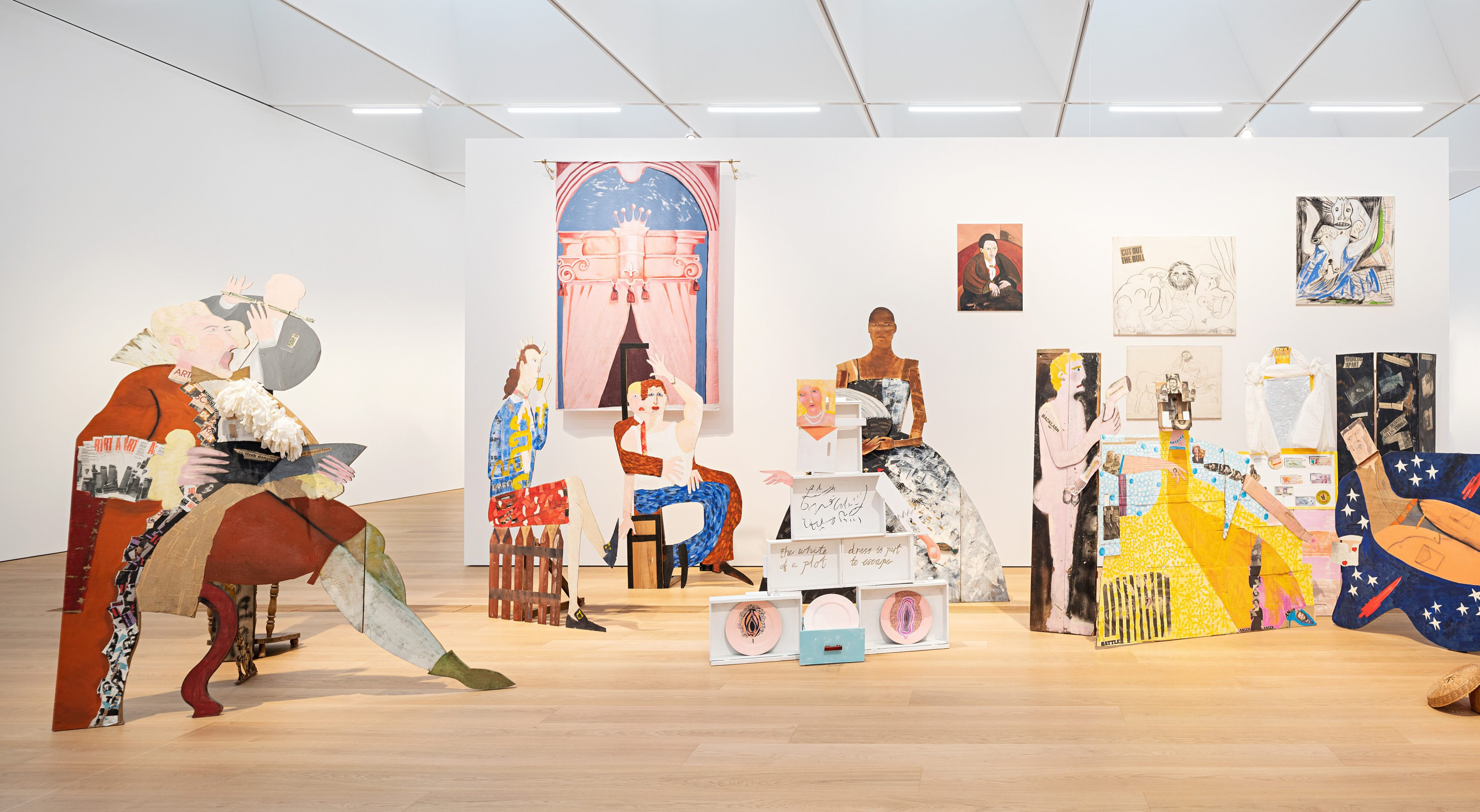
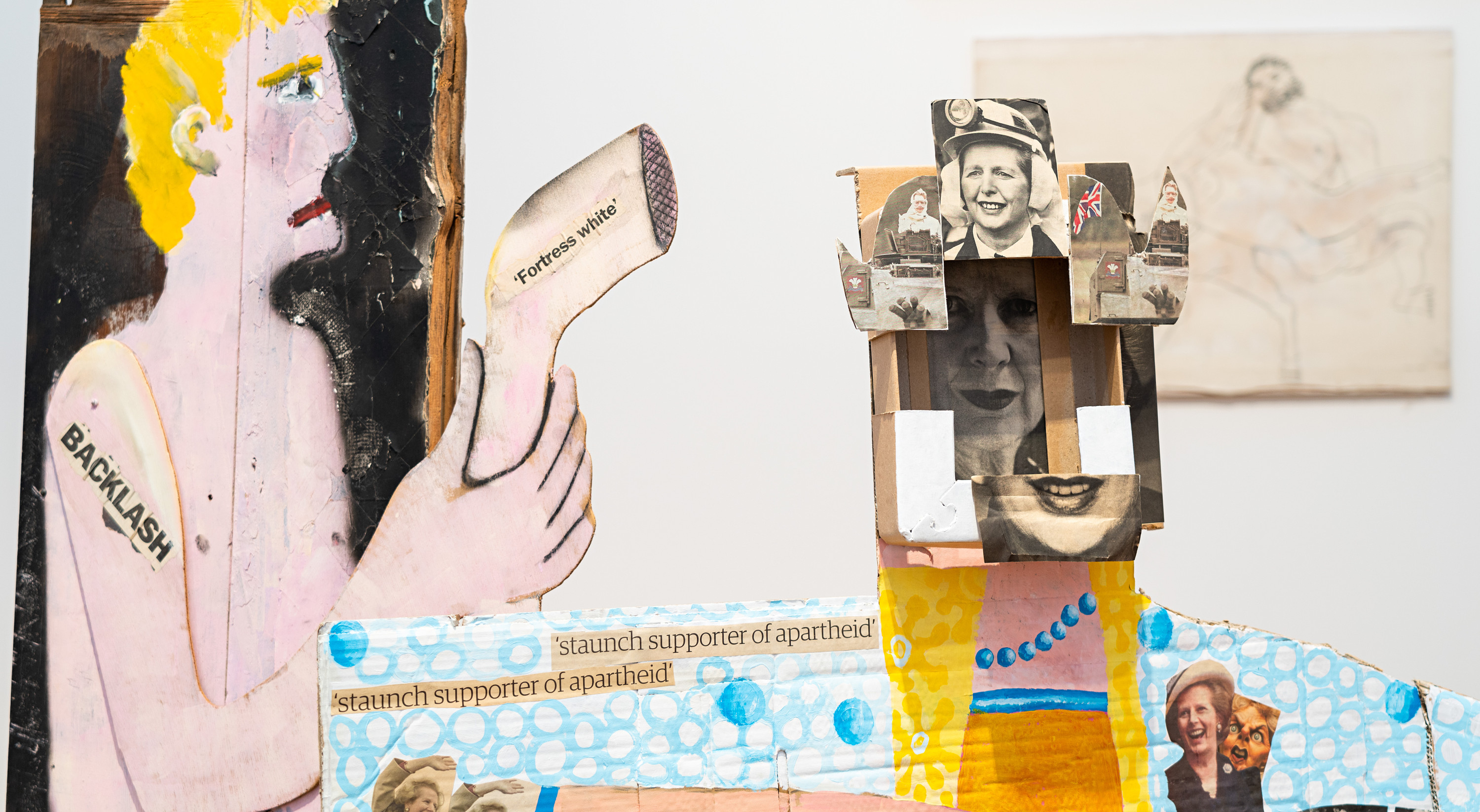
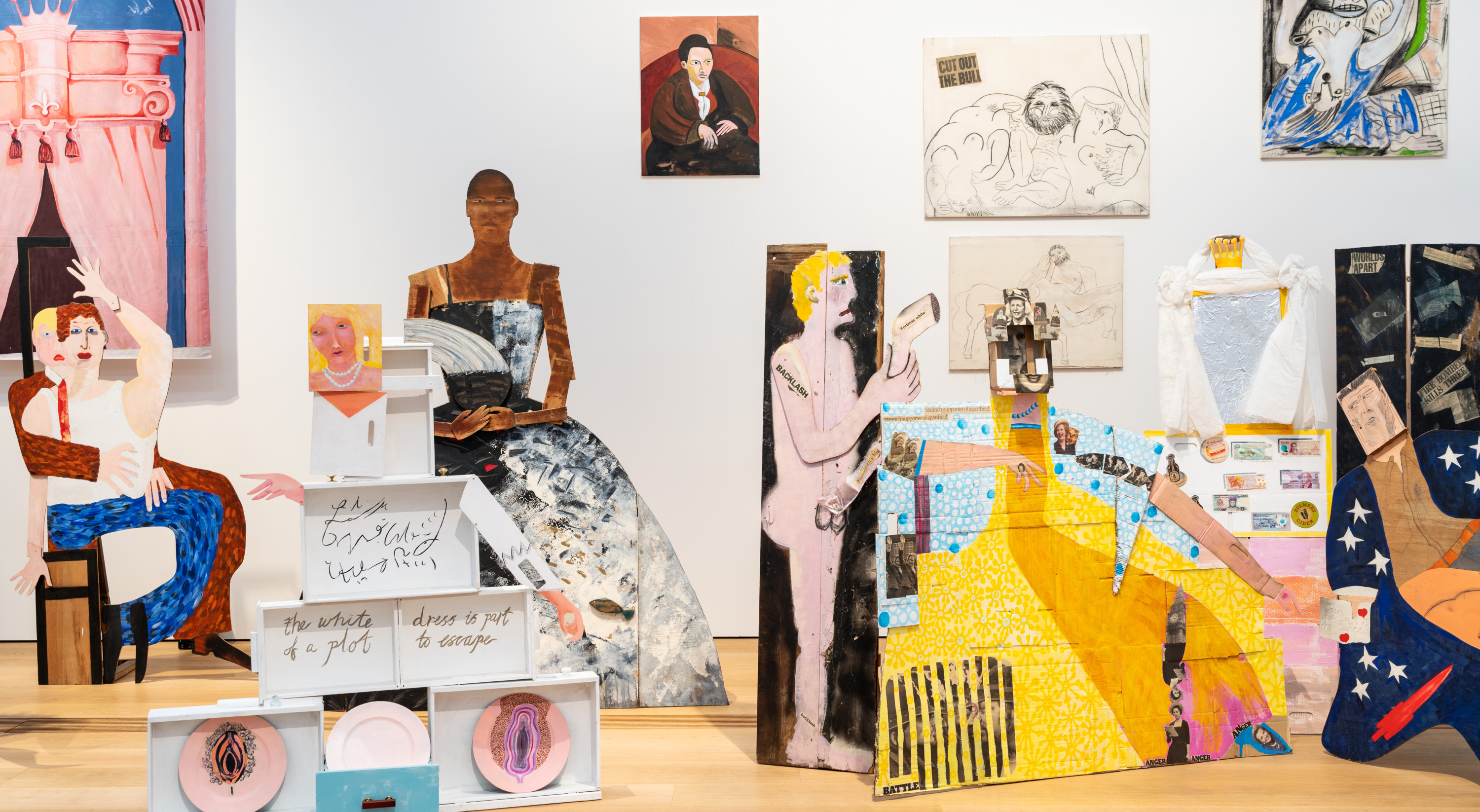
Alongside the exhibition Attendre ensemble at the Chapelle Saint-Louis de la Salpêtrière, Le Festival d'Automne and the Musée d’Art Moderne de Paris presents A Fashionable Marriage (1986), a key element in Lubaina Himid’s early work within the British Black Arts Movement. Forty years after it was created, this installation continues to be emblematic in terms of its practice by virtue of its precise articulation between the re-reading of art history—in this instance, the English satirical tradition not unlike that of William Hogarth and from which came the inspiration for the characters—and contemporary commentary on the state of British society.
Since the mid-1980’s, Lubaina Himid (born in 1954, Tanzania) has been undertaking a polymorphous, sensitive, in-situ body of work. The principal axes of her research are the portrait genre and how it can be brought up to date in keeping with the contemporary era, the alternative reading of the history of (British) art, the bringing to the forefront of the experiences of the diaspora, the question of belonging and, finally, the representation of much neglected cultural histories and figures—notably those relating to black culture and women – that were the vehicles of a great emancipatory power.
Within her practice, she articulates critical thought, first-person narratives and iconographic research, notably in relation to the history of textiles and motifs as transnational objects. Architecture also plays a major part in it, with questions such as: "In what types of buildings would women like to live and work? Has anyone ever asked us that question?". Her figurative works, elaborated with great precision, are accessible but also bring with them a profound reflection on the transformatory potential of art.
See also

Metro : ligne 9 - Arrêt Alma-Marceau ou Iéna
Vélib' : 4 rue de Longchamp ; 4 avenue Marceau ; place de la reine Astrid or 45 avenue Marceau
Bus : lignes 32 (Iéna), 42 (Alma-Marceau), 63 (Iéna), 72 (Musée d'Art moderne), 80 (Alma-Marceau), 82 (Iéna) & 92 (Alma-Marceau)