Betty Tchomanga
The Sea is History
© Mathieu Kleyebe Abonnenc ©
© Mathieu Kleyebe Abonnenc ©
© Mathieu Kleyebe Abonnenc ©

Metro : Bastille, Voltaire ou Bréguet-Sabin
Bus : 69 (Commandant Lamy), 61 (Basfroi)
Vélib' : 37 rue de la Roquette, 29 rue Keller, 169 avenue Ledru-Rollin, 9 rue Froment
Thursday december 3
20h
Friday december 4
20h
Saturday december 5
18h
Monday december 7
20h
Tuesday december 8
20h
Choreography and direction Betty Tchomanga. Based on an original idea by Betty Tchomanga and Mathieu Kleyebe Abonnenc. Dramaturgy Mathieu Kleyebe Abonnenc. Artistic collaboration and performance (in rotation) Andrège Bidiamambu, Betty Tchomanga, Camilo Mejía Cortés, Julien Ferranti, Karine Dahouindji, Kene, Kenza Kabisso, Mulunesh Tebebu, Ndoho Ange, Siaska Chareyre and Zora Snake. Set design Eduardo Abdala, Mathieu Kleyebe Abonnenc and Betty Tchomanga. Lighting design Eduardo Abdala. Sound design Stéphane Monteiro. Video design Mathieu Kleyebe Abonnenc. Assistant directors Emma Tricard and Dalila Khatir. Vocal coaching Dalila Khatir and Viviane Marc. Stage manager Emilie Godreuil. Head of production Marion Cachan. Production officer Florentine Busson. Administrator Marion Le Guerroué.
Production GANG
Co-production La Danse en Grande forme CNDC—Angers; CCN—Malandain Ballet Biarritz; CCN de Caen en Normandie; Boom’Structur—CDCN de Clermont-Ferrand Auvergne-Rhône-Alpes; La Comédie de Clermont-Ferrand; CCN de Grenoble; MC2: Maison de la Culture de Grenoble—Scène nationale; Maison de la danse de Lyon; CCN—Ballet national de Marseille; CCN—Ballet de Lorraine; Le Gymnase CDCN Roubaix Hauts-de-France; La Place de la Danse CDCN Toulouse/Occitanie; La briqueterie—CDCN du Val-de-Marne
With the support of the ACCN and the A-CDCN
Co-production Théâtre de la Bastille; Festival d’Automne à Paris; Danse à tous les étages CDCN touring in Brittany; Charleroi Danse, Wallonia-Brussels Choreographic Centre; CCAM National Theatre of Vandœuvre-les-Nancy; Le Quartz National Theatre of Brest via the Endowment Fund; TNB—National Theatre of Brittany
With financial support from DGCA—Film scriptwriting grant; DRAC Bretagne—Subsidised company; Brittany Region; City of Brest; Sponsorship from Caisse des Dépôts, principal sponsor
Residencies MC2: Maison de la Culture de Grenoble—Scène Nationale; L’Agora, Cité Internationale de la Danse—Montpellier Danse; CCN Occitanie, with the support of the BNP Paribas Foundation; Charleroi Danse, choreographic centre of Wallonia-Brussels; CCN de Caen en Normandie; Danse à tous les étages, touring CDCN in Brittany; Le Quartz, scène nationale de Brest; Le Triangle, state-subsidised dance venue in Rennes; TNB—Théâtre National de Bretagne; La Ménagerie de verre as part of the StudioLab programme; CND Centre national de la danse
The Théâtre de la Bastille and the Festival d’Automne in Paris are co-producers and present this show in corealisation.
With the support of

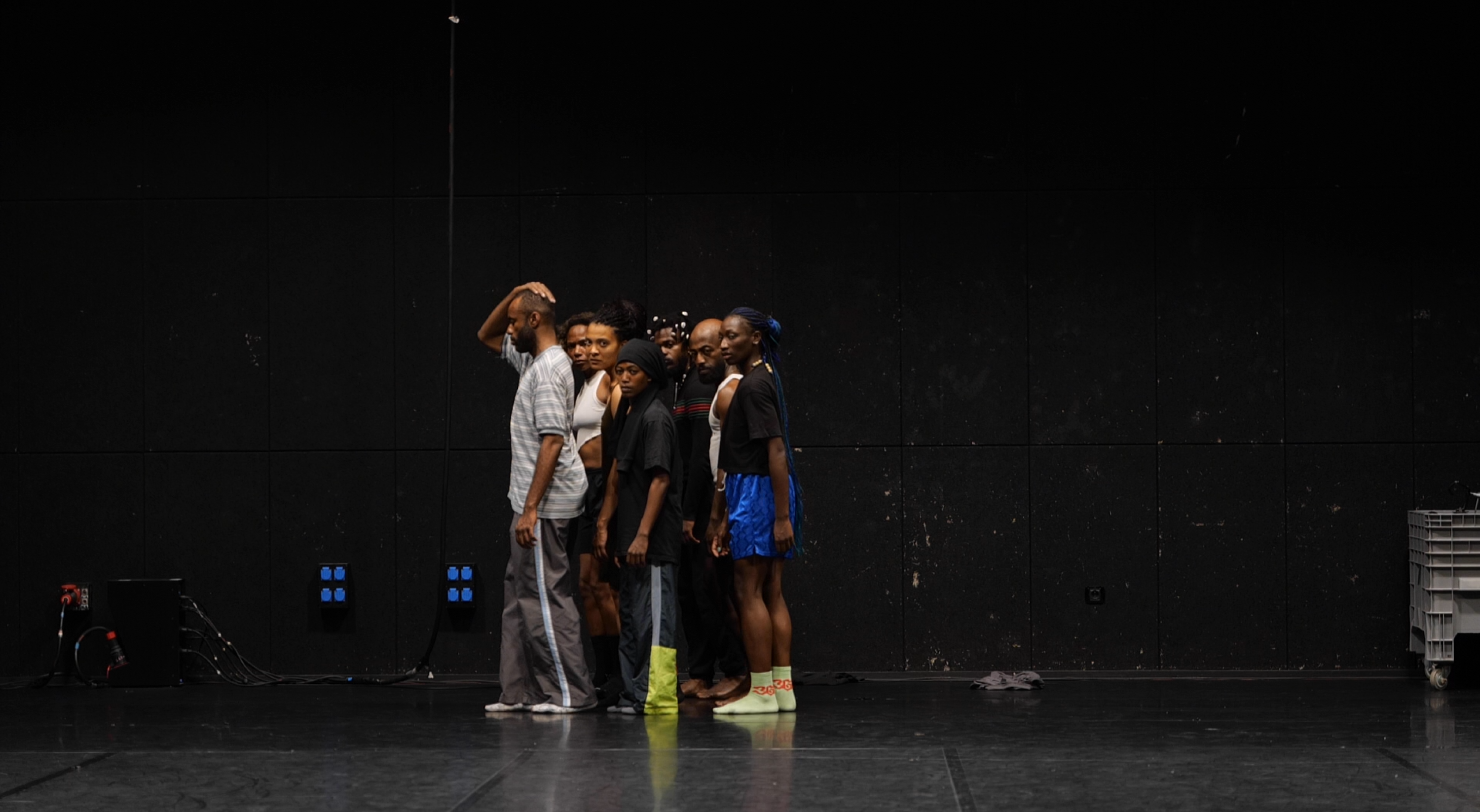
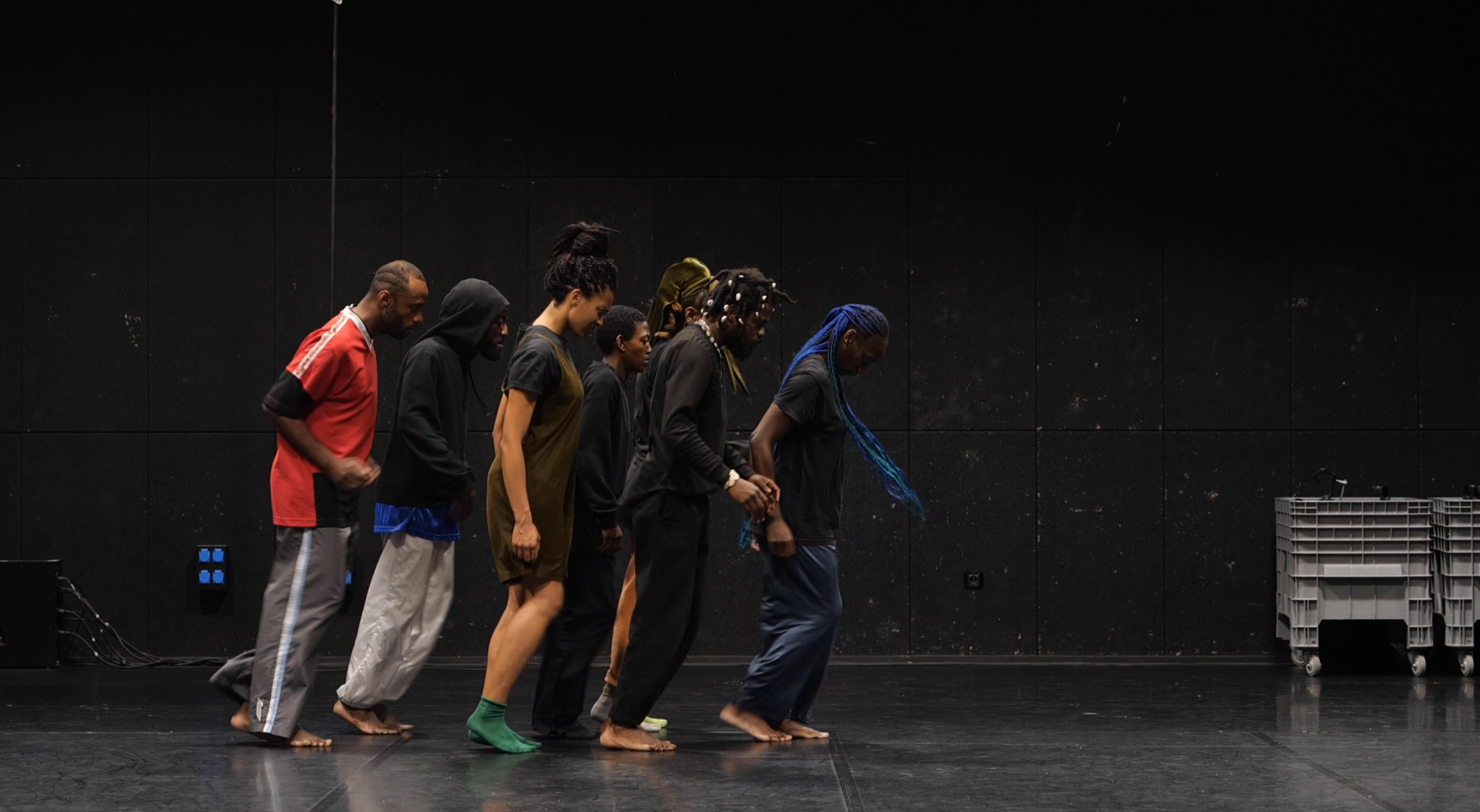
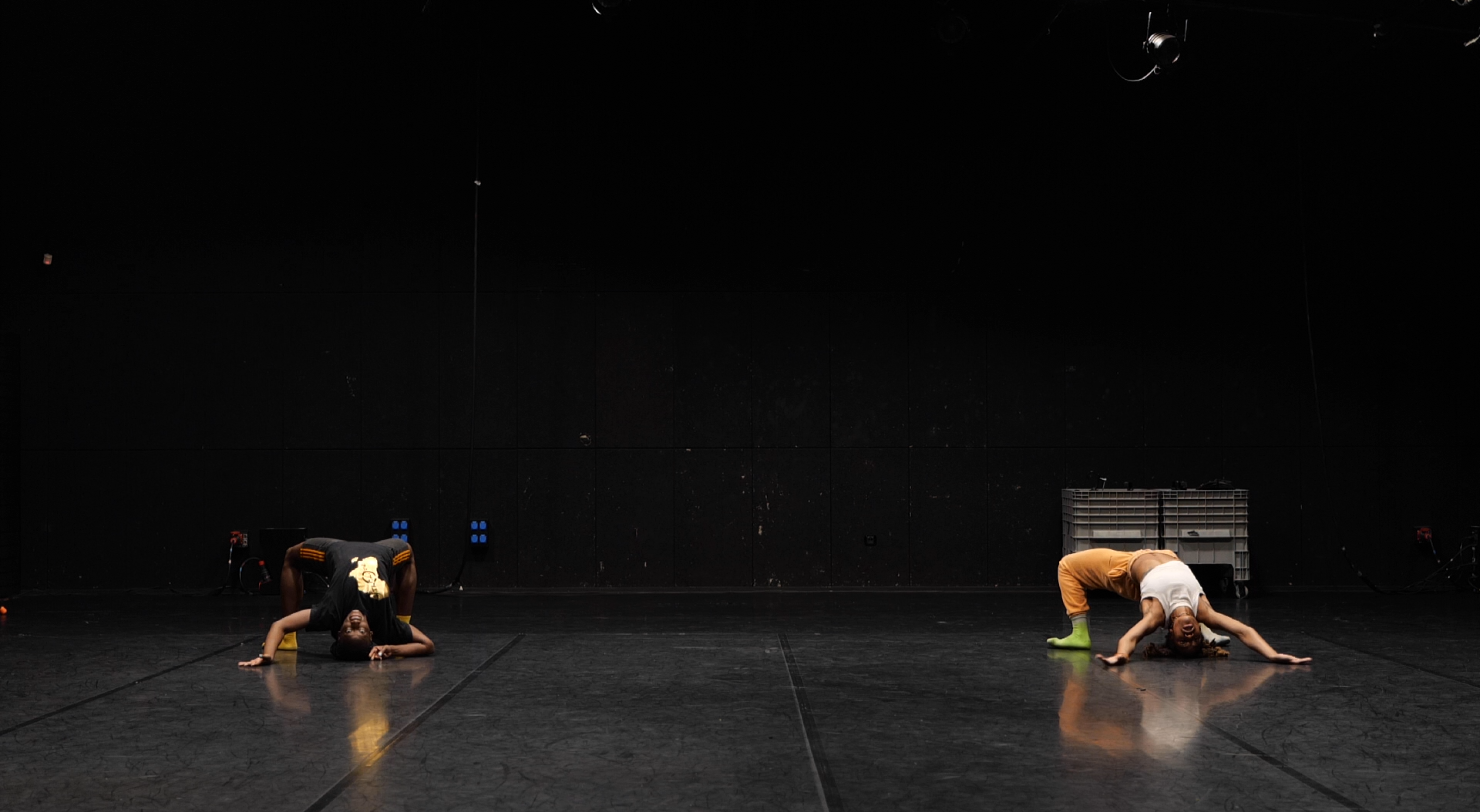
With The Sea is History, Betty Tchomanga furthers her work centred upon living memories of the African diaspora. After centuries of violence, how can it write its own history? In the wake of such widespread dispossession, how can it reclaim itself, its own body?
The Atlantic Ocean links Europe, Africa, the Americas and the Caribbean just as much as it keeps them apart. After Leçons de Ténèbres and the metaphorical figure of the world as a ship, Betty Tchomanga sets sail once again and sets about enriching representations of Afrodiasporic identities. The choreographer draws upon the writer Saidiya Hartman’s method of "critical fabulation", meaning a two-fold gesture of reconstitution and imagination, at the point where archive and memory converge. Set to the incantatory rhythm of a hybrid musical corpus, a group of afro-descendant dancers turn to their bodies in search of what has resisted against colonial history, despite the violence and attempts at its erasure. The images that these figures make visible are abstract, subterranean, and powerful. The choreography, structured around the motif of the fugue, or flight, turns it into a gesture which is as subversive as it is political. Onstage, the entire theatrical machinery serves as the decor, in reference to its historic links with the space of the ship itself. Colonisation has shaped modernity and today its heritage must be brought into question. The Sea is History brings to the stage interplay between lines and planes of an ingenious kind, and in doing so invites us to continue to overturn our perspectives.

Metro : Bastille, Voltaire ou Bréguet-Sabin
Bus : 69 (Commandant Lamy), 61 (Basfroi)
Vélib' : 37 rue de la Roquette, 29 rue Keller, 169 avenue Ledru-Rollin, 9 rue Froment