Kenza Berrada
Paradis Plage (une vie comme dans du miel) حياة مثل العسل
octoberoct 7 – 11
© Manuel Shapira ©

Metro 13 - Gabriel Péri
Bus 54, 140, 175, 177 - Place Voltaire ou bien + Lignes 235, 276, 340, 577 - Gabriel Péri
Wednesday october 7
20h
Thursday october 8
20h
Friday october 9
20h
Saturday october 10
18h
Sunday october 11
16h
Text and staging Kenza Berrada. With Le Kabareh Cheikhats (Amine Naouni, Ali Lamaadli, Ghassan Elhakim, El Mostafa Boutankite, Walid Rakik) and Kenza Berrada. Collaboration in writing Raphaël Chevènement. Sound creation Kinda Hassan. Video creation Maud Neve. Scenography Florian Sanson. Lumières et régie générale Pierre Daubigny. Costumes Judith De Luze. Movement Annabelle Chambon and Cédric Charron. Administration and production Martin Lorenté. Distribution and production Marko Rankov.
Production Compagnie Banjaliko
Production déléguée Cyclorama
Coproductions TNS—Théâtre national de Strasbourg ; T2G Théâtre de Gennevilliers—Centre dramatique national ; Festival d’Automne à Paris ; Saison Méditerranée 2026 de l’Institut Français ; structure production incubateur ; Points communs—Nouvelle scène nationale de Cergy-Pontoise et du Val d’Oise
Soutiens Fonds de dotation Porosus ; Jeune Théâtre national ; Institut Français du Maroc ; Commission Internationale du Théâtre Francophone
Accueils en résidence Institut Français de Casablanca ; Le Point Éphémère ; Théâtre Silvia Monfort ; La Maison des Métallos pour le festival Fragments ; « Cartes Blanches » du Nouveau
Studio Théâtre
Le T2G Théâtre de Gennevilliers—Centre dramatique national and le Festival d'Automne à Paris are co-realisator of this show and present it as a co-realisation.
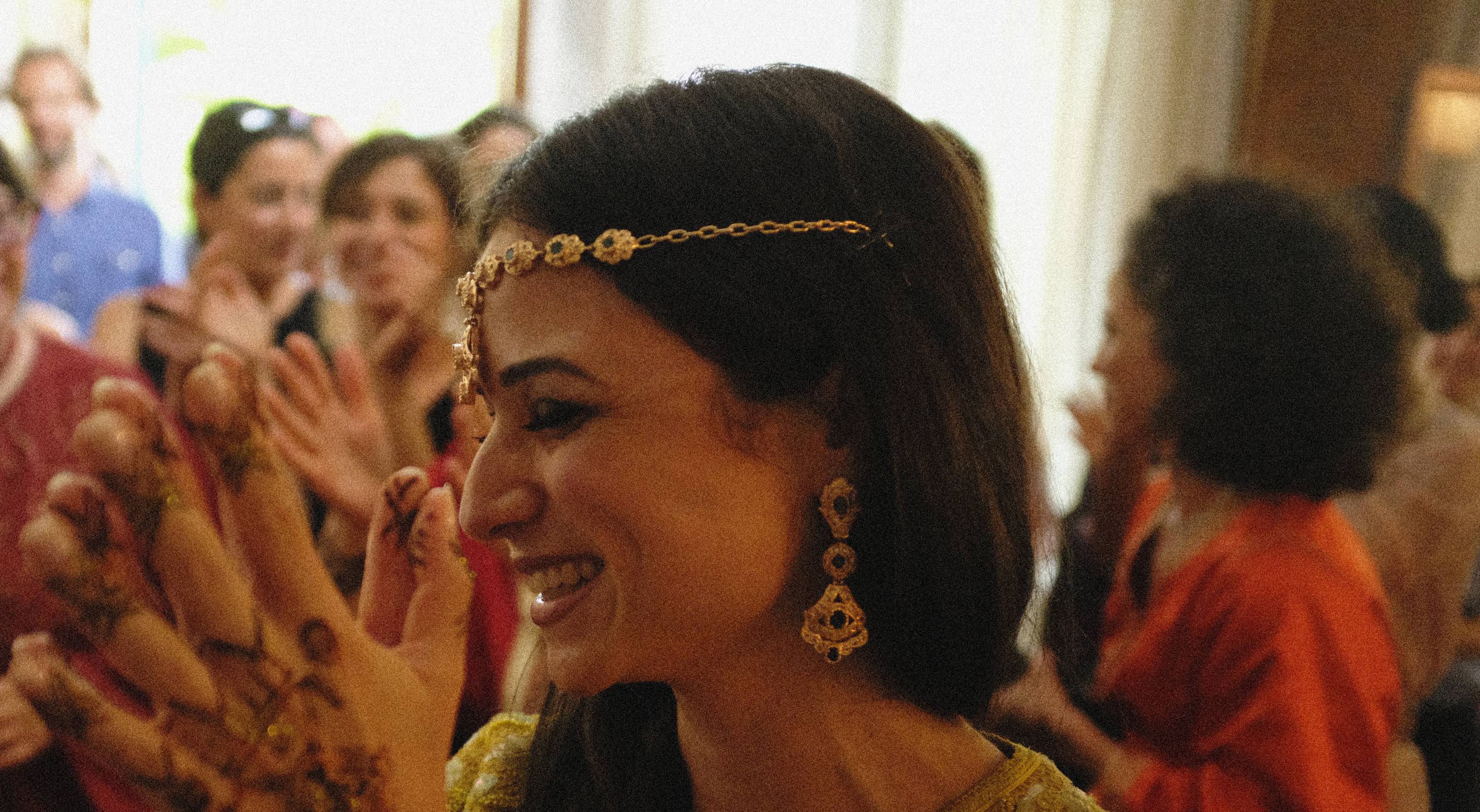
With Paradis plage, Kenza Berrada conjures up a huis clos at the heart of the Moroccan bourgeoisie. Stifled by its code of decorum, the characters cling to the idea of the family, against all odds.
"Machi hada swab": "It’s not swab". In the upper reaches of Moroccan society, this phrase acts as a sentence. Swab means good manners, politeness, and being well brought-up. Any attempts at going against are deeply frowned upon. In Morocco, a whole panoply of families, their origins in Fès, and with a shared nostalgia for former splendours, vow their allegiance to this code of conduct. This is the society in which Kenza Berrada grew up. In Paradis plage (une vie comme dans du miel), the director takes the traditional Moroccan living-room and turns it into an arena. Via interplay of a subtle nature, French and Moroccan Arabic blend with each other and bring to the surface the different frames of mind, as well as the domination-based relationships that prevail. Onstage, portraits of children evoke feelings of nostalgia for happy times gone by. From out of the house’s fountain, usually cool and refreshing, begins to flow a viscous liquid, which spreads to all corners and ends up contaminating language itself. This all-consuming substance symbolises that of the unsaid. In this instance, it is that of an elder brother who commits incest on his younger sister. To embody the different characters, Kenza Berrada invites the performers from Casablanca’s Kabareh Cheikhats, no strangers to the art of travesty and cross-dressing. To mirror-like effect, Paradis plage overturns male-dominated order and prompts spectators to question gender representations, both here as elsewhere.
In the same place

Metro 13 - Gabriel Péri
Bus 54, 140, 175, 177 - Place Voltaire ou bien + Lignes 235, 276, 340, 577 - Gabriel Péri