Carte Blanche
Since 2022, the Festival d'Automne has opened up its programme to artists and collectives, making a gesture that is both artistic and political. The Carte Blanche becomes a space for experimentation, conducive to crossovers of aesthetics and to the circulation of ideas and audiences.
An artist for whom the body lies at the heart of her writing, nora chipaumire thinks in movement and in defiance of established categories, preferring to call her practice live art. A living art that has allowed her—since her first piece in 2003—to draw on her own journey and to deconstruct the stereotypes associated with the Black body. After the Brazilian art centre Casa do Povo last year, the Festival d'Automne entrusts her with its 2026 Carte Blanche, conceived as a space for dialogue and exchange between practices.
This Carte Blanche takes place at the Ménagerie de verre, the beating heart and headquarters of the Festival during the first three weeks of its 2026 edition, before closing in the exhibition spaces of the Fondation Cartier pour l'art contemporain at the end of December.
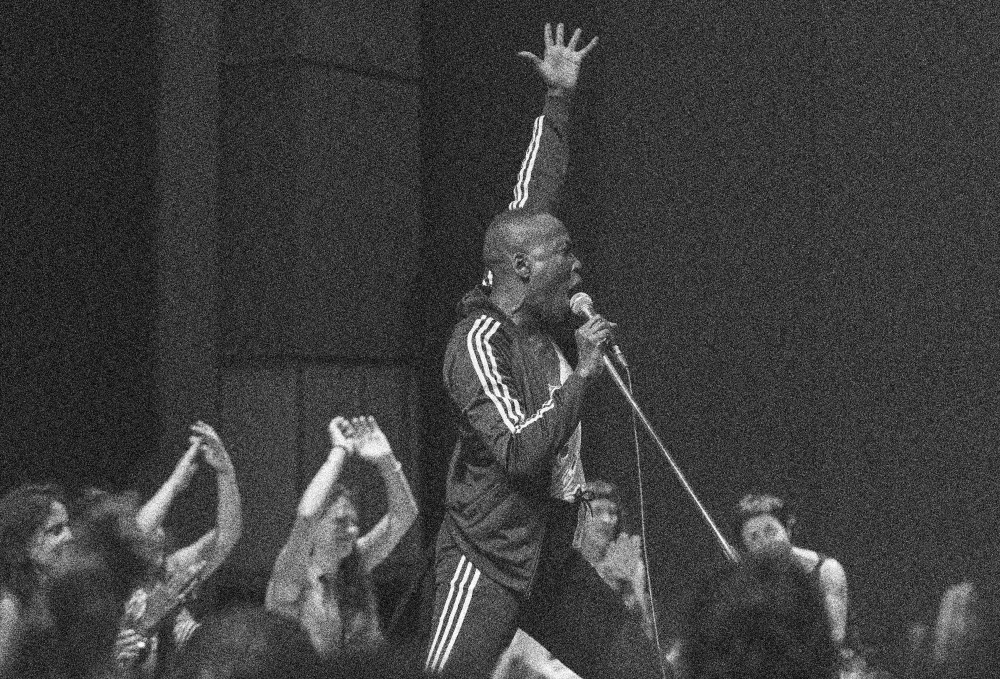
punk, africa moment (Barcelona) © Jesús Robisco
What bridges can be made between Harare, Dakar and Paris? What forms of dialogue and exchange can we imagine between these three cities, their history and present? A proposition made to her by the Festival d’Automne, nora chipaumire’s Carte Blanche —renamed as carte noire—has been drawn up as a form of response to these questions. Formerly based in New York, the choreographer and dancer has close links with each of these metropoles: in Zimbabwe, the country of her birth and in which she founded nhereraHUB, a place of work and reflection which is open to projects of different kinds; in Senegal, where she spent a long period of time working, notably, with the women of the Toubab Dialaw village; and in Paris where several of her works have been presented, the image of which has given her a love of conversation, in the true sense of the word.
These encounters might just as easily take on the form of exchanges around a dining room table, dialogues with and between academics, and the conveyors of knowledge and emotion that constitute fashion, books, performances, music, food, and dance. All this and more will be overflowing within the four walls of the Ménagerie de verre, the Festival’s beating heart during the first three weeks of its 2026 edition, until it comes to a close in the exhibition spaces of the Fondation Cartier for Contemporary Art.