Bouchra Ouizguen
Qunfudh
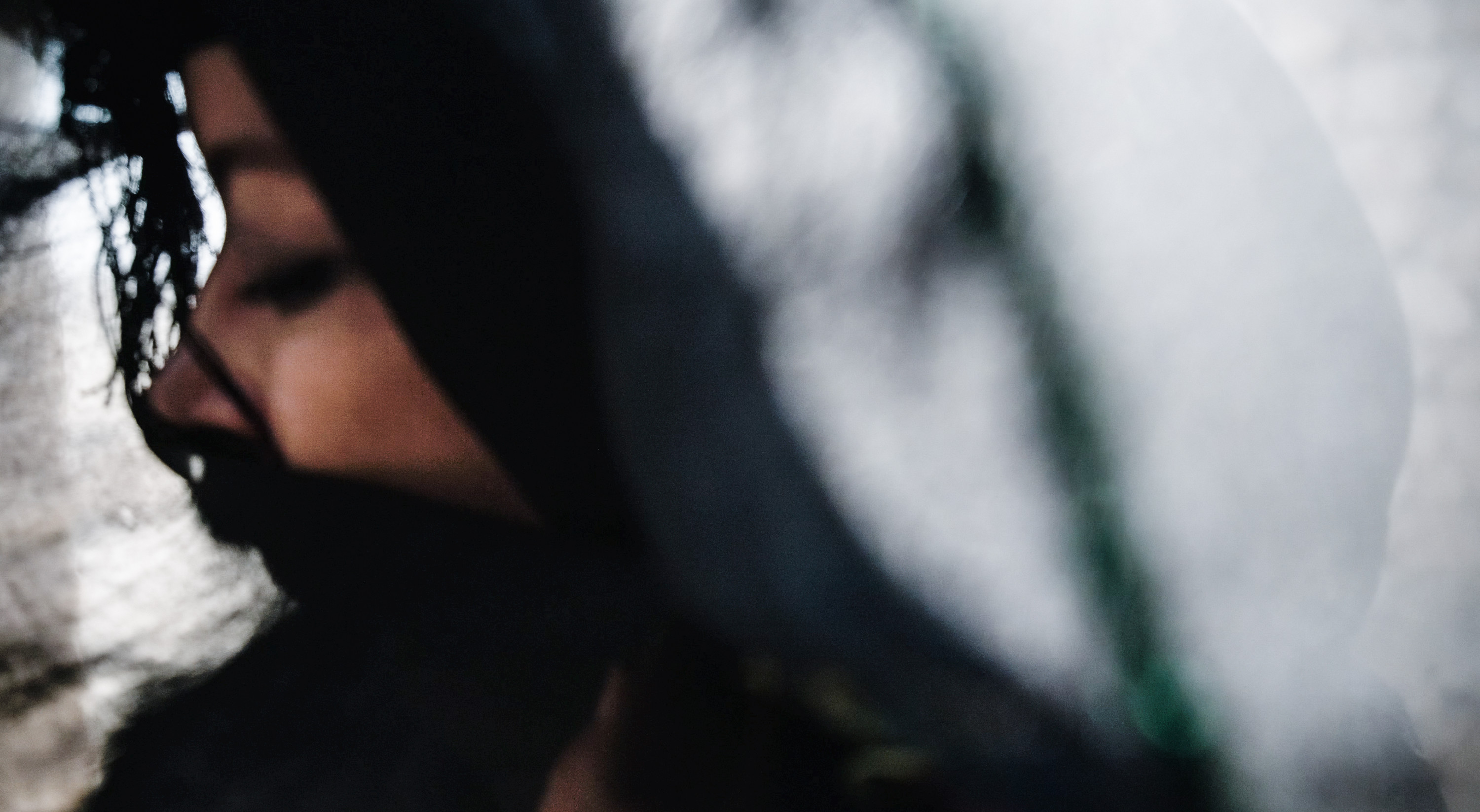
© Tala Hadid ©
Metro Ligne 5 Station Bobigny – Pablo Picasso then walk 5 minutes
Tramway T1 Station Hôtel-de-ville de Bobigny – Maison de la Culture
Bus 146, 148, 303, 615, 620 Bobigny Station - Pablo Picasso
Bus 134, 234, 251, 322, 301 Hôtel-de-ville Station
Vélib’ Stations Bobigny – Pablo-Picasso et Jean-Jaurès – Place de la Libération
Thursday october 22
19h30
Friday october 23
19h30
Saturday october 24
18h30
Sunday october 25
17h30
Artistic direction Bouchra Ouizguen. Dance Bouchra Ouizguen. Lighting Eric Wurtz. Sound (in progress). Costumes (in progress). Administration, production Mylène Gaillon.
Production Compagnie O
Coproduction Festival d’Automne à Paris; (in progress)
With the support of the MC93—Maison de la Culture de Seine-Saint-Denis; the CND Centre national de la danse and the CENTQUATRE-Paris, artist residency
With the support of the Fondation d’entreprise Hermès
Bouchra Ouizguen is a recipient of the City of Paris’s international residency programme at Les Récollets
The Festival d’Automne à Paris is a coproducer of this show and presents it in corealisation with the MC93—Maison de la Culture de Seine-Saint-Denis.
With the support of
Event organised as part of the 2026 Mediterranean Season
Bouchra Ouizguen operates at the threshold, at the point where the body opens itself up to what appears. Movement, permeated by traces and reminiscences, blends with bouts of song, music and silence. Alone onstage, the choreographer searches for a space of freedom, in which disappearance becomes a form of presence.
Qunfudh—meaning "hedgehog" in Arabic, evokes a body which is just as able to fold inwards as outwards. Similar to the hedgehog, being alone in front of an audience is a fine line between exposure and protection. In her work, Bouchra Ouizguen often confers the figure of the solo to those that remain in the shadows. Here, she confronts herself with it. But the solo is never solitary. It gathers up memories, solitudes of a lived-in, joyous kind, dances from the past and figures that counted for us in the past. The light carries childhood within the desert, routes that have been followed, and tales heard. Chants from the Amazigh mountains, the cante alentejano or music from the pearl divers of the Middle East, relayed, at times, by silence, alter the movement. This is the narrative of an artist in perpetual transhumance, a response to frontiers and the restriction of movement. Bouchra Ouizguen searches for a state of openness from out of which something can emerge and attempts, as the Sufi poet Ibn Arabi writes, to “walk freely between the visible and the invisible”.
Qunfudh is being performed alongside the Mosaïque—Ce qui traverse les corps programme, in which Bouchra Ouizguen has invited three choreographers to present their work at the MC93. These pieces can be seen together or separately, depending on the performance dates.
See also
Metro Ligne 5 Station Bobigny – Pablo Picasso then walk 5 minutes
Tramway T1 Station Hôtel-de-ville de Bobigny – Maison de la Culture
Bus 146, 148, 303, 615, 620 Bobigny Station - Pablo Picasso
Bus 134, 234, 251, 322, 301 Hôtel-de-ville Station
Vélib’ Stations Bobigny – Pablo-Picasso et Jean-Jaurès – Place de la Libération