École du soir, Forensic Architecture
The Conditions of Life and the Biosphere of War
Eyal Weizman et Ghassan Abu Sittah in conversation with Michel Fehrer, Paul Preciado, Kali Rubaii, Sherene Seikali, et Lara Sheehi, moderated by Rasha Salti
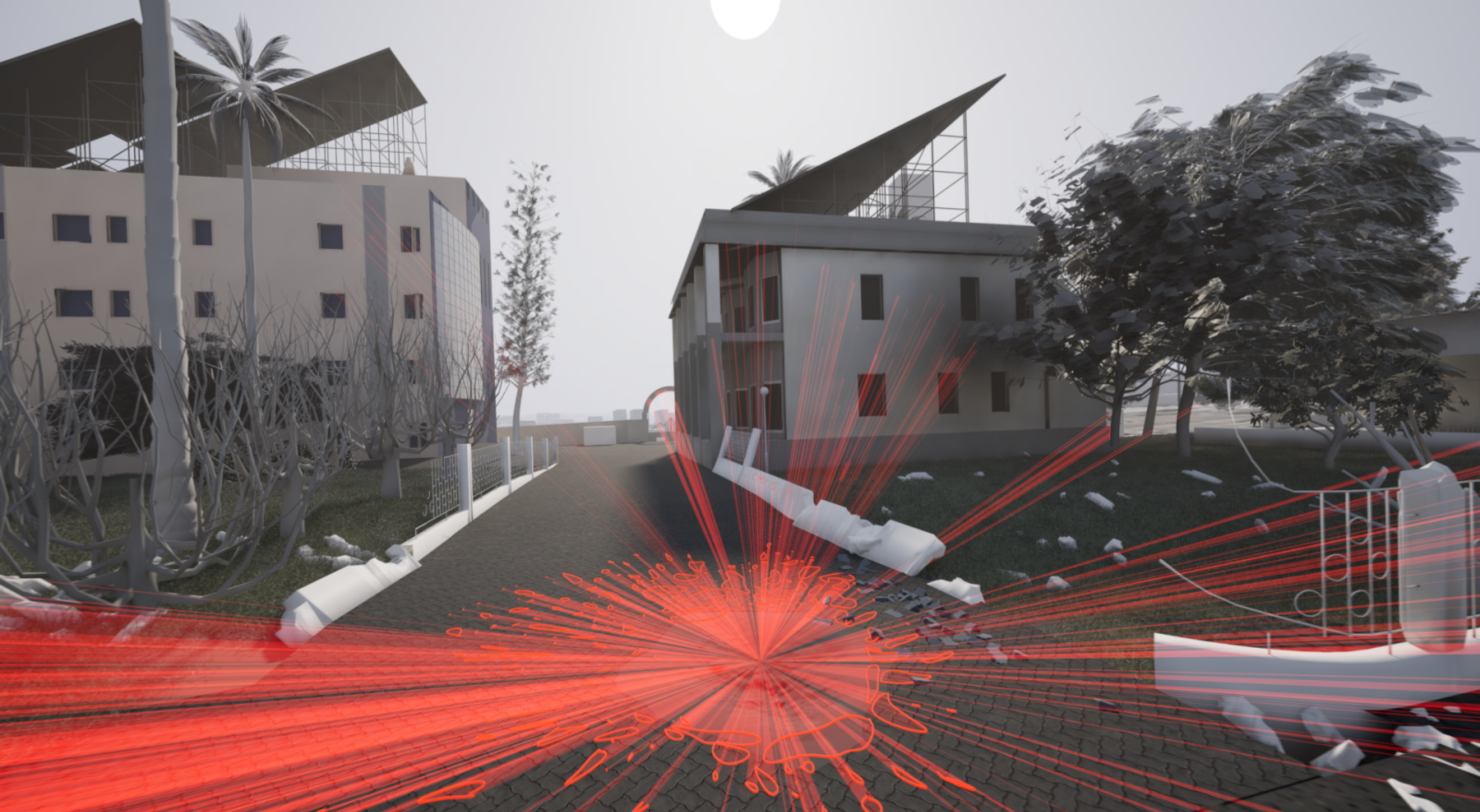
© Forensic Architecture ©
Metro Ligne 5 Station Bobigny – Pablo Picasso then walk 5 minutes
Tramway T1 Station Hôtel-de-ville de Bobigny – Maison de la Culture
Bus 146, 148, 303, 615, 620 Bobigny Station - Pablo Picasso
Bus 134, 234, 251, 322, 301 Hôtel-de-ville Station
Vélib’ Stations Bobigny – Pablo-Picasso et Jean-Jaurès – Place de la Libération
Sunday november 29
14h - 19h
In partnership with MC93—Maison de la Culture de Seine-Saint-Denis and Espace Niemeyer
With the support of
Ramdane Touhami.
Shortly after the South African government charged the Israeli government with perpetrating genocide in Gaza (29 December 2023), the Forensic Architecture team was contracted to compile evidence in support of South Africa’s application. This commission has occasioned a close collaboration with Dr. Ghassan Abu Sittah, a British-Palestinian plastic surgeon with extensive experience in conflict zones –Iraq, Lebanon, Syria, Yemen, and who has often practiced in Gaza. Abu Sittah arrived in Gaza on October 8, 2023 and started tending to the wounded at several hospitals. He became a public figure as he led the press conference, flanked by other doctors, after the shelling of Al-Ahli Arab (also known as Baptist) Hospital that caused the death of nearly 500 Palestinians on October 17, 2023. Since he left Gaza, Abu Sittah has been campaigning to stop the genocide and mobilizing support for victims in Gaza.
Collecting information through close connections to the battleground as well as tending to injuries, assembling the case-by-case evidence from the close focus angle, yet doing so from wide angle of the distance of being far removed from it, has led both Eyal Weizman and Ghassan Abu Sittah to synthesize the proverbial ‘bigger picture’ or that which they refer to the “Conditions of Life” –also the title for this gathering.
In addition to that synthetic perspective, and perhaps more vitally, both practitioners have developed theses that propose generative and critical reconsiderations of normative paradigms that have guided architectural practice and medical practice under the aegis of settler colonialism and the legacy of Palestinian resistance.
The title for this gathering, Conditions of life, is borrowed from article II of the Genocide Convention, adopted on December 9, 1948, that affirms that genocide is not limited to acts of mass killing, but includes “inflicting on the group conditions of life calculated to bring about its physical destruction in whole or in part”. Therefore, genocide encompasses actions that create living conditions intended to destroy a group over time”, such as severely impeded access to food, medical care and essential services. Similarly, Ghassan Abu Sittah’s notion of the “biosphere of war” emerges from the recognition that the duration and brutality of wars, along with their associated crimes, create a lasting impact, long after the cessation of fire, on the interactions of all living beings with the natural resources that sustain them. The Gaza Strip has transformed into the all-encompassing war biosphere, best described by intellectual Achille Mbembe as a death-world.
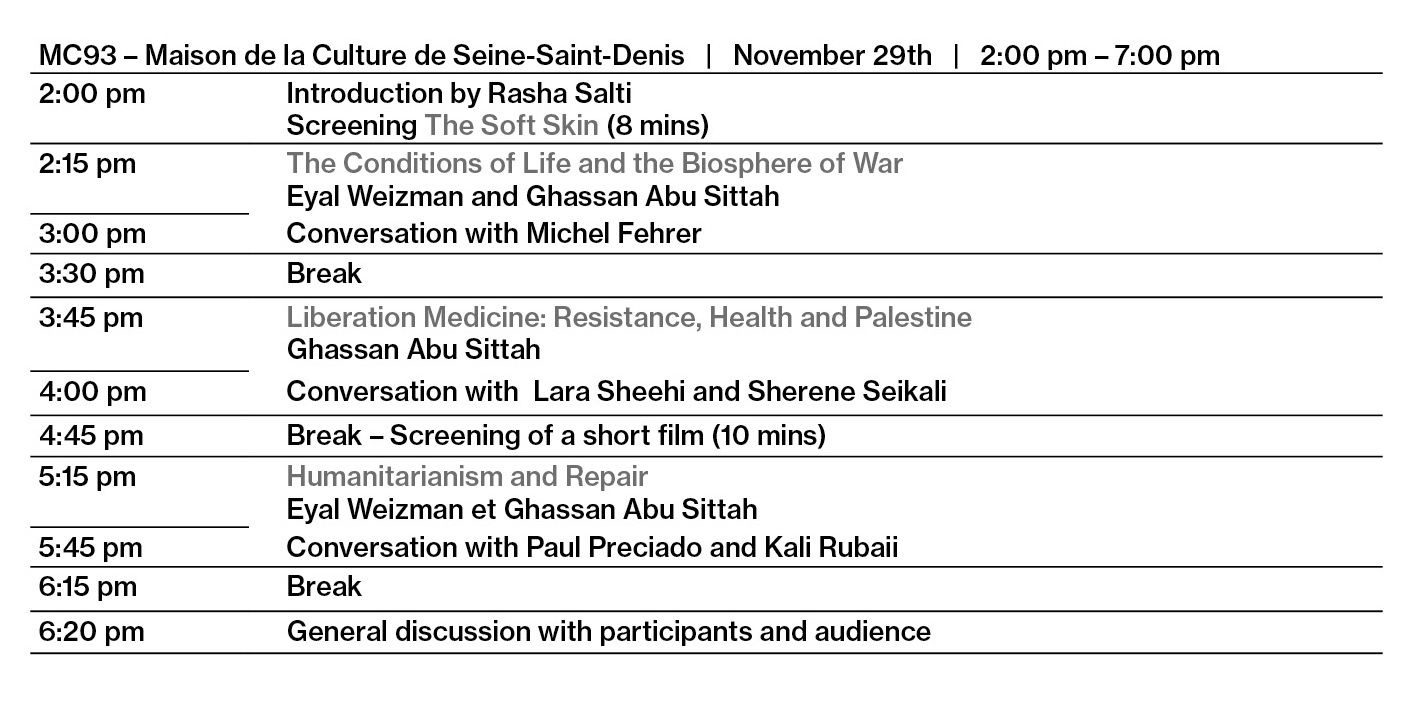
The program is conceived to be dynamic and conversational, articulating in three movements that each invite responses from guests, it also is interspersed with short film screenings and will culminate with a general discussion with guests and the audience.
Each of the three movements is led by a theme.
The first will explore the overarching notions of the “conditions of life” and the “biosphere of war” with Michel Fehrer responding to Weizman and Abu Sittah.
The second will explore the notion of “liberation medicine”, developed by Abu Sittah with responses from Sherene Seikali and Lara Sheehi.
The third will discuss humanitarianism and the paths towards repair with responses from Paul Preciado and Kali Rubaii.
Threaded throughout the program’s conversations will be revisiting Michel Foucault’s notions of biopolitics and sovereignty, Achille Mbembe’s generative postulate on necro-politics, Frantz Fanon’s notions of wounding as colonial practice, western liberal humanitarianism in Gaza and paradigm shifts of repair.
Metro Ligne 5 Station Bobigny – Pablo Picasso then walk 5 minutes
Tramway T1 Station Hôtel-de-ville de Bobigny – Maison de la Culture
Bus 146, 148, 303, 615, 620 Bobigny Station - Pablo Picasso
Bus 134, 234, 251, 322, 301 Hôtel-de-ville Station
Vélib’ Stations Bobigny – Pablo-Picasso et Jean-Jaurès – Place de la Libération