Carolina Bianchi Y Cara de Cavalo
The Brotherhood
Trilogia Cadela Força – Chapter II
© Mayra Azzi ©
© Mayra Azzi ©
© Mayra Azzi ©

Metro 4 et 10 : Station Odéon
RER B: Luxembourg
RER C : Saint-Michel
Bus : 63, 87, 86, 70, 96, 58
Parkings : rue Soufflot ; Place St Sulpice ; rue de l'Ecole de Médecine
Vélib' : stations 6028, 6017, 6016
Thursday september 24
19h30
Thursday october 1
19h30
Concept, text, direction and set Carolina Bianchi. With Chico Lima, Flow Kountouriotis, José Artur, Kai Wido Meyer, Lucas Delfino, Rafael Limongelli, Rodrigo Andreolli, Tomás Decina and Carolina Bianchi. Translation for subtitles Marina Matheus (English), Thomas Resendes (French). Dramaturg and research partner Carolina Mendonça. Technical direction, original music, sound design Miguel Caldas. Assistant director Murillo Basso. Scenography and graphic design Luisa Callegari. Lighting design Jo Rios. Video and screening Montserrat Fonseca Llach. Costumes Luisa Callegari, Carolina Bianchi. Prologue choreography and movement advisor Jimena Pérez Salerno. Live camera and artistic support Larissa Ballarotti. Photos Mayra Azzi. Stage manager, production assistant AnaCris Medina. Production direction, tour manager, and communication Carla Estefan. International relation, production, and diffusion Metro Gestão Cultural (Brazil).
Production Metro Gestão Cultural (BR), Carolina Bianchi Y Cara de Cavalo
Coproduction KVS Koninklijke Vlaamse Schouwburg- Brussels, Theater Utrecht, La Villette –Paris, Festival d’Automne à Paris, Comédie de Genève, Internationales Sommer Festival Kampnagel, Les Célestins –Théâtre de Lyon, Kunstenfestivaldesarts, Wiener Festwochen, Holland Festival, Frascati Producties HAU Hebbel am Ufer -Berlin, and Maillon, Théâtre de Strasbourg - Scène européenne
Residency to finish the play and set construction KVS Brussels
Residencies La Villette-Paris, Frascati Amsterdam, Utrecht Theater -De Paardenkathedraal, Kampnagel-Hamburg
Supported by Tax shelter van de Belgische Federale Overheid, The Ammodo Foundation-NL
The show premiered on 9th May 2025 at KVS -Brussels, in the frame of the Kunstefestivaldesarts
The Festival d’Automne à Paris is a coproducer of this show and present it as a corealisation with Odéon Théâtre de l’Europe.
Trilogia Cadela Força - Trilogie intégrale
Odéon Théâtre de l’Europe—Odéon Paris 6
19—20 and 26—27 september
A Noiva e o Boa Noite Cinderela
Odéon Théâtre de l’Europe—Odéon Paris 6
23 and 30 september
Uma Luz Cordial
Odéon Théâtre de l’Europe—Odéon Paris 6
09.25 and 10.02
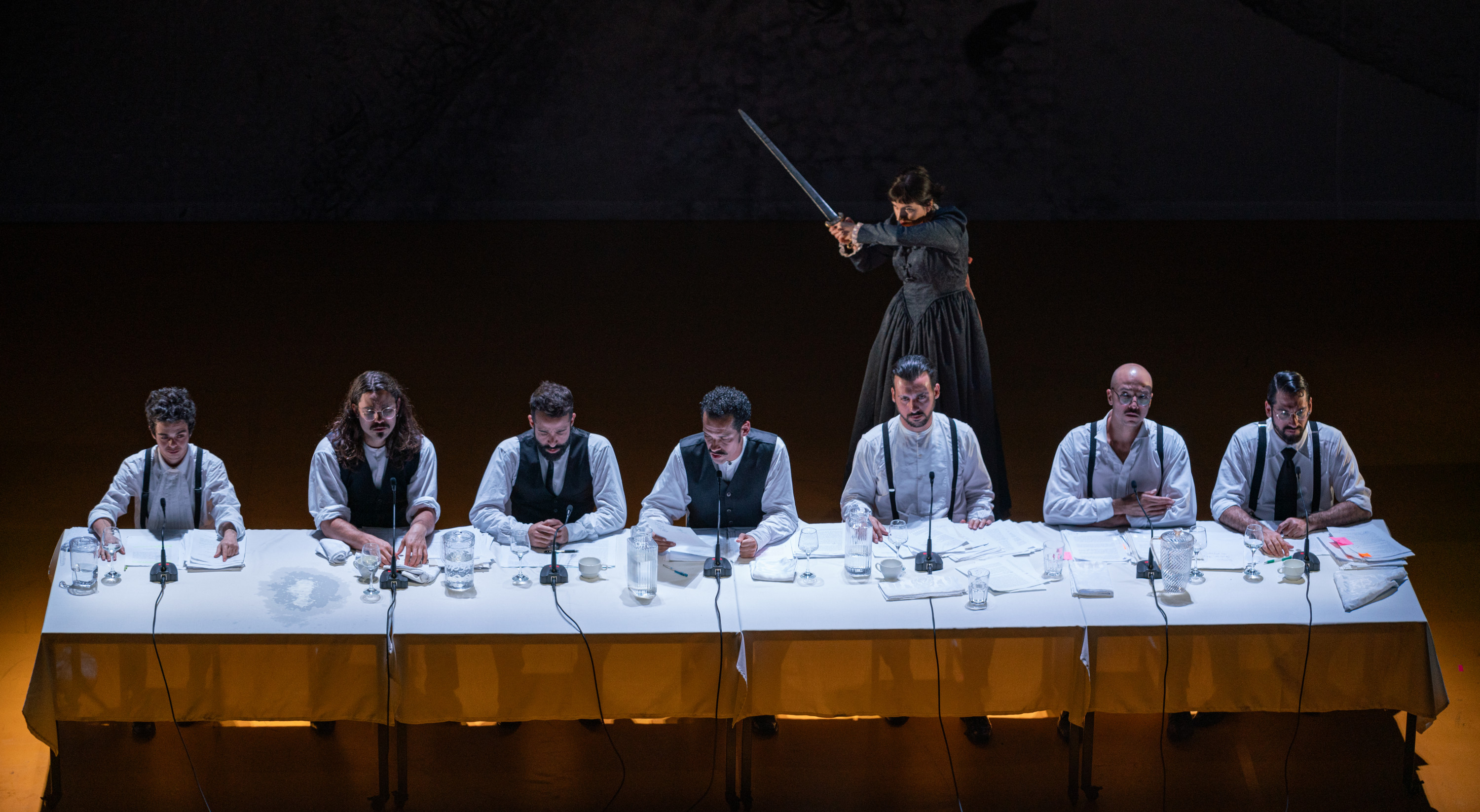
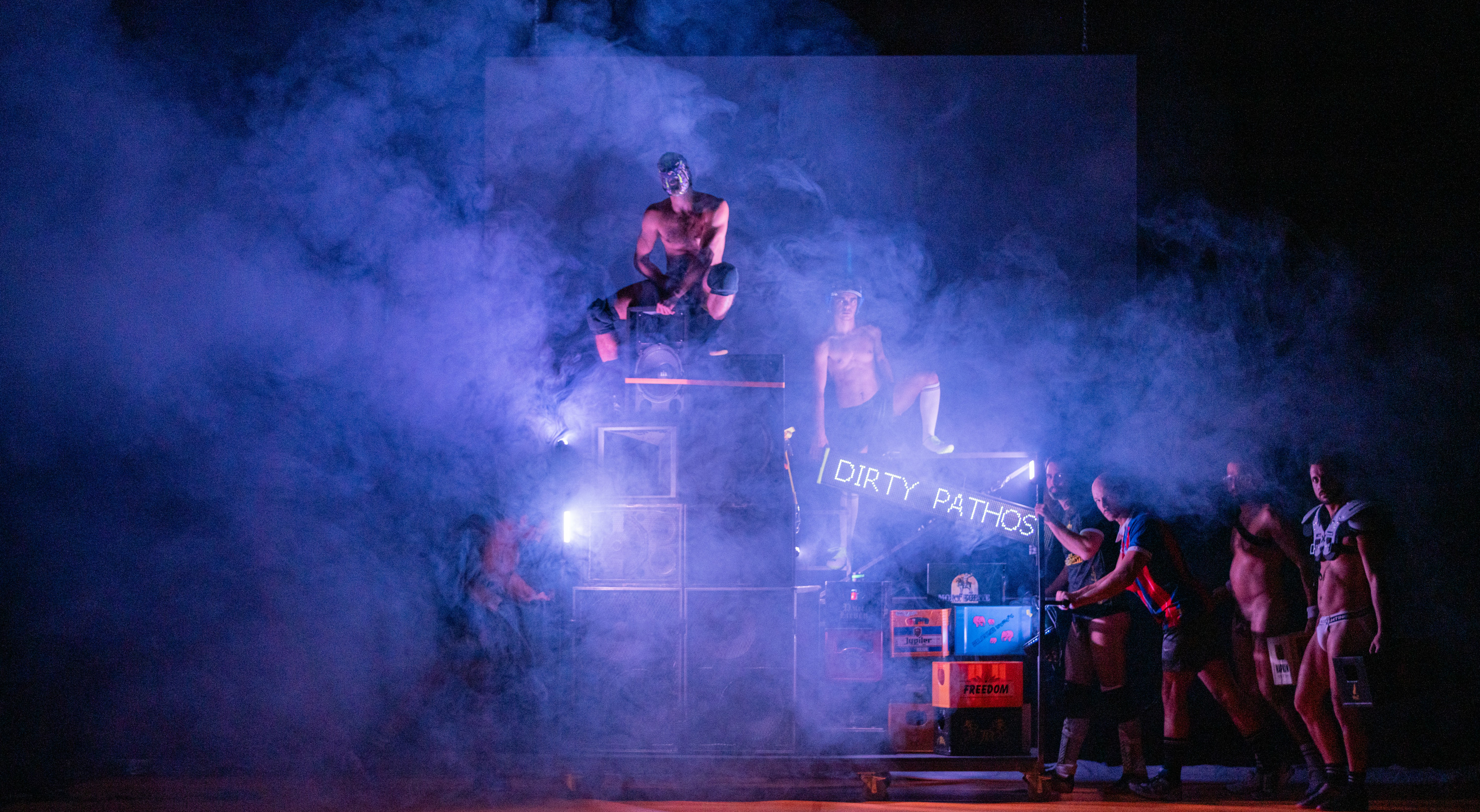
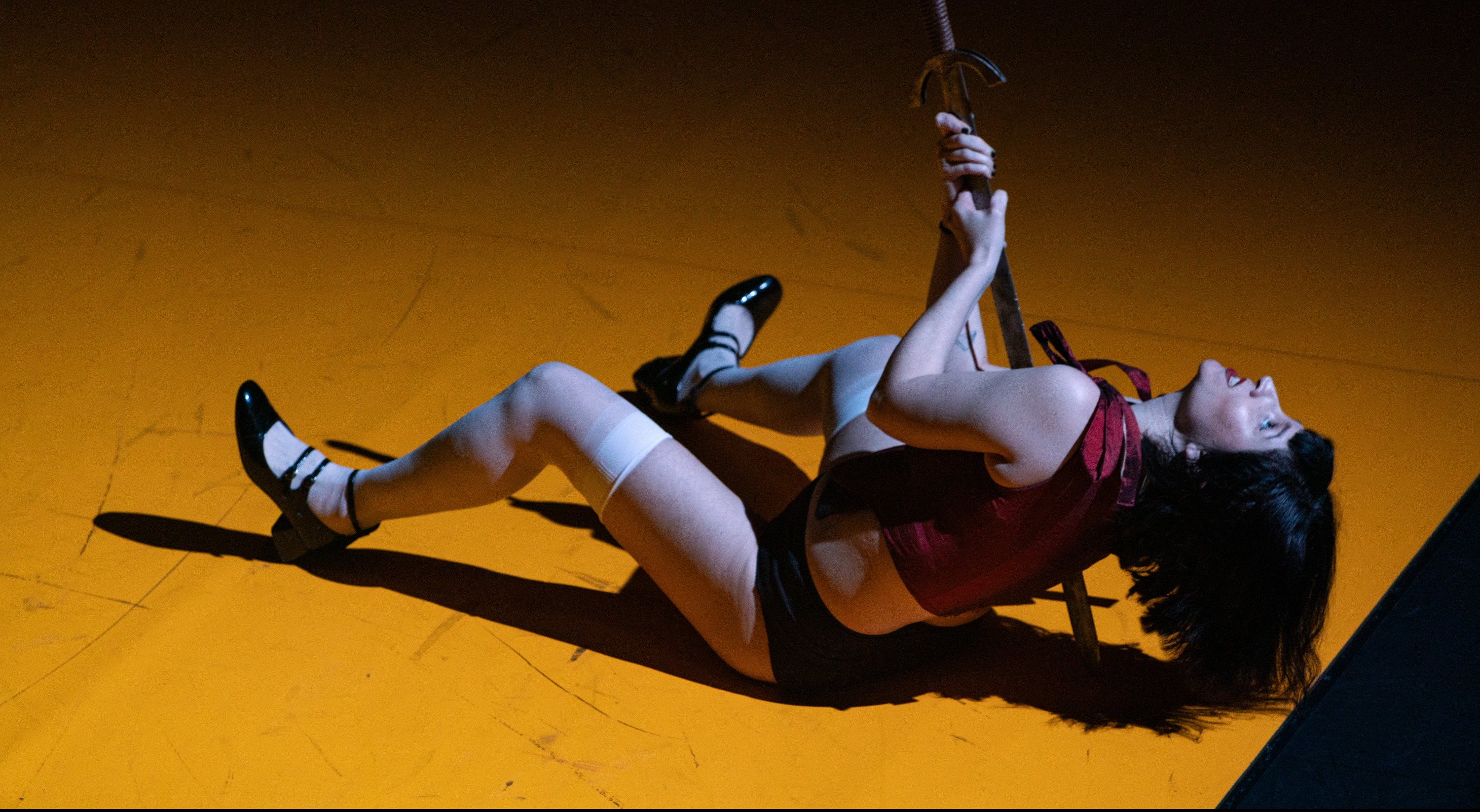
In this second chapter, Carolina Bianchi and the Cara de Cavalo collective immerse themselves in the complexity of all-male pacts in the world of theatre, in addition to their possible origins and codes—all too often part of a framework of violence, in which rape and sexual violence become a language.
Void of any over-simplification, The Brotherhood recognises the powers of fascination that these fraternities sometimes exert, notably in the history of art. In doing so, the text enters into a zone of uncertainty, on the border between repulsion and attraction for the dynamics of male power. Carolina Bianchi puts the instruments of theatre to use in the aim of opening up possible avenues of reflection, interweaving persistent links between representation and traumatism, structures of power in art and radical poetry, as well as the origins of misogyny and a sexuality in crisis. Even the form that the show takes reveals itself to be a trap: it weakens the female writer and director’s authority, transforming her into a spectral figure. In the first act, Carolina Bianchi interviews Klaus Haas, a powerful, world-renowned theatre director. In the second, a group of male performers take over the stage, meanwhile the artist herself gradually appears in the form of a ghost, haunted by her own desires.
In the same place
Metro 4 et 10 : Station Odéon
RER B: Luxembourg
RER C : Saint-Michel
Bus : 63, 87, 86, 70, 96, 58
Parkings : rue Soufflot ; Place St Sulpice ; rue de l'Ecole de Médecine
Vélib' : stations 6028, 6017, 6016